Skip to content
Is Your Horse Going to the Back of the Stable?
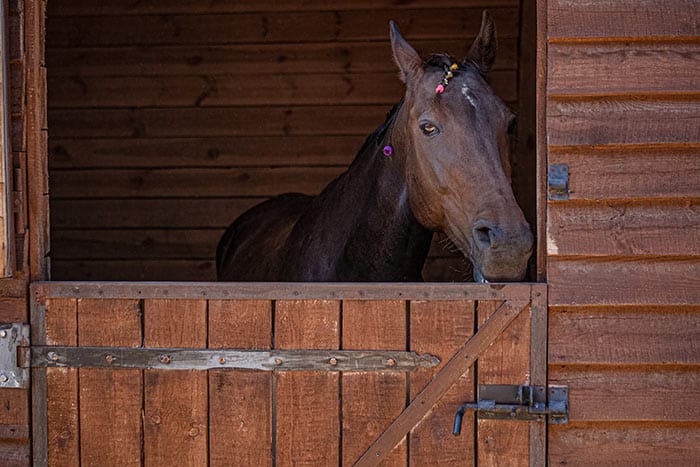
You walk into the stable with the bridle and instead of standing quietly your horse moves away.
You step forward… he spins.
You try again… he turns his hindquarters towards you.
He even lifts a leg—not to kick, but as a warning.
And the immediate thought…
“They’re being difficult.” “This is new behaviour.” “They’re just trying to get out of work.”
But let’s be honest—horses don’t think like that.
This is a pain association response.
Horses don’t plot or misbehave out of spite, they learn through association. If something has caused discomfort—especially repeatedly—they begin to anticipate it.
When anticipation builds, so does the need to avoid it. That’s when you start to see moving away in the stable, spinning, or becoming evasive, turning the hindquarters, tension through the body, a warning lift of a leg.
This is not attitude. This is self-preservation.
Think of it this way…
If you had a pair of shoes that rubbed every time you wore them, what would you do? You wouldn’t keep putting them on. You’d avoid them. You’d push them to the back of the wardrobe.
Eventually, you’d refuse to wear them altogether. The psychological response to pain is avoidance.
Horses are no different. In fact, horses are generally quiet, tolerant animals, they don’t draw attention to discomfort. So, by the time they are actively avoiding you in the stable, the issue has usually been there for some time.
What you are seeing now is a stress response—because the discomfort has become too much to ignore.
There is often a second response that goes hand in hand with this.
The horse that holds the bit and won’t release it.
I often hear: “He loves his bit—he doesn’t want to let it go.”
No.
He doesn’t like it.
By holding the bit, the horse is trying to stop it moving, to minimise the discomfort. It’s a coping strategy—not acceptance.
Find the Trigger before jumping to conclusions, take a step back and break the situation down.
Ask yourself: Does this happen when you take a headcollar in?
When you go in to groom or muck out?
Or does it only happen when the bridle or tack is presented?
This matters, because it helps you pinpoint exactly what your horse is trying to avoid.
Don’t assume “Nothing Has Changed”
One of the most common things I hear is: “But they’ve always been fine in this bit.” That may have been true—but horses change, teeth change, mouth sensitivity changes, workload and expectations change, riders change.
Horses coming back into work or from rehab often move differently.
Even subtle changes can alter how a bit feels, and sometimes, what was tolerated before is no longer acceptable.
Start with the basics—but don’t stop there.
Yes—check the teeth, that’s essential, but don’t stop at “the dentist has been.”
You also need to assess:
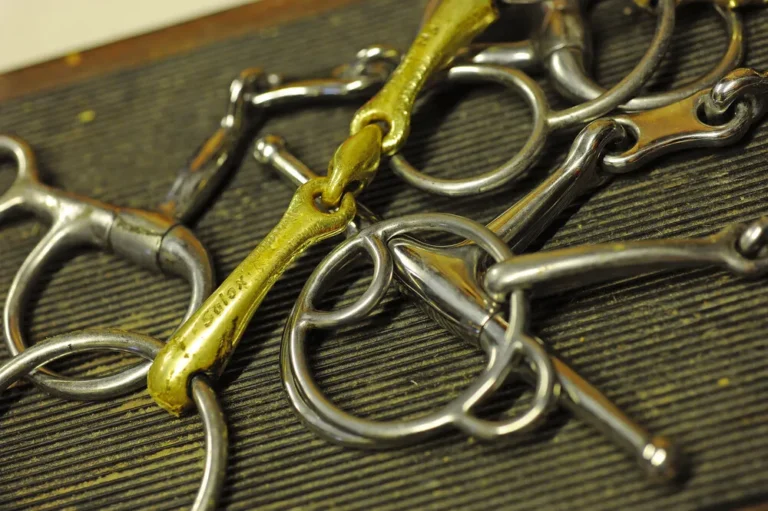
The bit—size, shape, thickness, balance, movement.
How it sits in the mouth.
How the horse receives it
The overall bridle fit and pressure across the head
Because discomfort in the mouth doesn’t stay in the mouth—it affects the whole horse.
Don’t wait for escalation, if your horse is already avoiding you in the stable, becoming defensive and/or showing warning behaviours they are not at the start of the problem, they are at the point where they feel they need to be heard.
Don’t wait until the behaviour becomes bigger, stronger, or more dangerous.
Listen early. Observe properly. Act before the horse has to shout.
Because every horse deserves to be comfortable—whatever their age or ability.