Skip to content

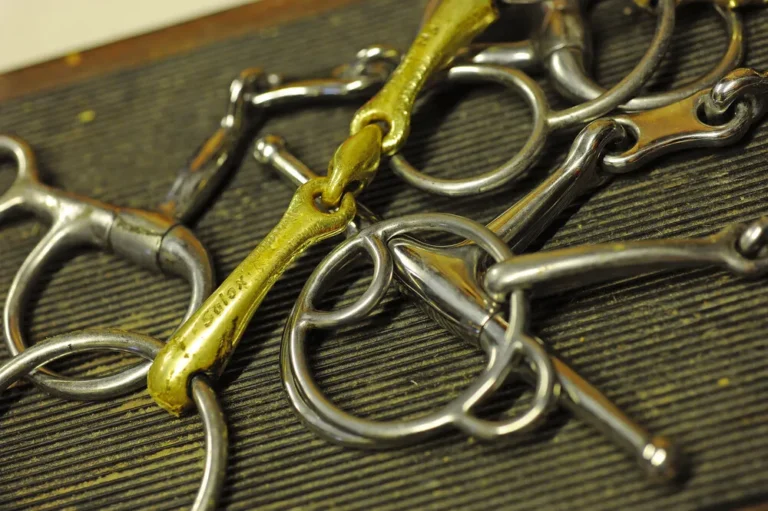
The first bit choice you make for a horse is one of the most influential decisions for their welfare and their education.
Get it wrong, and you risk creating the very first resistance and evasion—the kind that quietly turns into learned, repetitive habits long before anyone realises there is a problem. These early patterns rarely stay isolated to the mouth. They travel through the horse’s body, training, and long-term soundness.
Horses change — so the bit may need to change too
Over the course of a horse’s education, we ask for many different responses. Strength improves, balance shifts, coordination develops, and expectations increase. It is entirely reasonable—and often essential—that the bit evolves alongside this process.
Bit choice should always be influenced by:
- The horse’s growth rate and physical development
- Strength, balance, and coordination
- Temperament and natural way of going
- The rider’s level of feel, timing, and clarity
The early stages: acceptance before performance
In the beginning, the aim is very simple: bit acceptance.
The horse should be able to:
Lift the tongue comfortably to swallow
Carry the bit without restriction or guarding
Remain relaxed through the lips, tongue, and lower jaw
In-hand work and early ridden stages should prioritise:
Stability in the contact
A stretch from wither to ear
A soft, mobile lower jaw
Straightness
The lower jaw is pivotal. Once tension appears here, it rarely stays put. Resistance in the jaw often leads to restriction through the poll, compromised straightness, reduced core engagement, shortened shoulder movement, and altered hock action.
This is never “just a mouth issue.”
It is a whole-horse picture.
Progressing the training: choosing a bit with intent
As the horse develops and the work becomes more demanding, the bit should support what you are asking.
At this stage, the key question is not “what bit is popular?” but “what does my horse need help to understand right now?”
Examples:
A young or growing horse that is still on the forehand does not benefit from a bit that creates a heavier contact. That simply increases weight through the shoulders and forelimbs.
A high-headed, tense horse may need a mouthpiece that encourages the horse to seek forward and down into a wither-to-ear stretch.
As the horse gains strength and begins to carry itself more, a change may be required to create lighter contact, lift through the wither and shoulders, and allow the hind leg to become more active and influential.
Big movement, coordination, and tongue pressure
Horses with large movement often struggle most with coordination. In these cases, relying solely on a basic snaffle can be counterproductive.
Excessive tongue pressure frequently results in the horse:
Pulling the tongue away from the mouthpiece
Holding the tongue high as a coping mechanism
Fixing the lower jaw to limit bit movement
This is one of the most common resistance patterns seen in training.
Rather than increasing pressure, the aim should be to disperse it. Clearer signals and better distribution of pressure help the horse organise their body without needing to brace or evade.
When observing your horse, the tongue should rest quietly in the mouth, only moving to swallow. Sustained tongue elevation leads to jaw fatigue, tension, and often a horse that curls behind the contact simply to find relief.
Different disciplines, different needs
Expecting one bit to suit every discipline rarely serves the horse well.
Dressage bits often act with more isolation and refinement
Cross-country bits may need additional signals to help regulate speed, stride length, and balance
Showjumping bits may support clearer turning aids and greater stability before and after fences
We routinely change saddles for different disciplines—why would bits be any different?
As a general guide
- A horse progressing from early education through to maturity may reasonably go through around eight bit changes
Horses in non-competitive work may typically rotate through around four
This assumes correct fitting, thoughtful progression, and adequate training time between changes.
When the bit is wrong—whether through fit, action, cheekpiece, or mouthpiece—it doesn’t merely slow progress. It actively undermines the horse, physically and psychologically.
The bigger picture
Changing a bit is not admitting failure.
It is recognising development.
Think of bit changes as stepping stones, not setbacks—each one helping the horse understand the work more clearly, move more comfortably, and stay sound for longer.
When the horse is genuinely comfortable in the mouth, everything else becomes easier:
Movement becomes freer
Contact becomes lighter
Communication becomes clearer
Longevity improves
And that is the goal—training that supports the horse, not just the moment.